Tipology:
Farmer
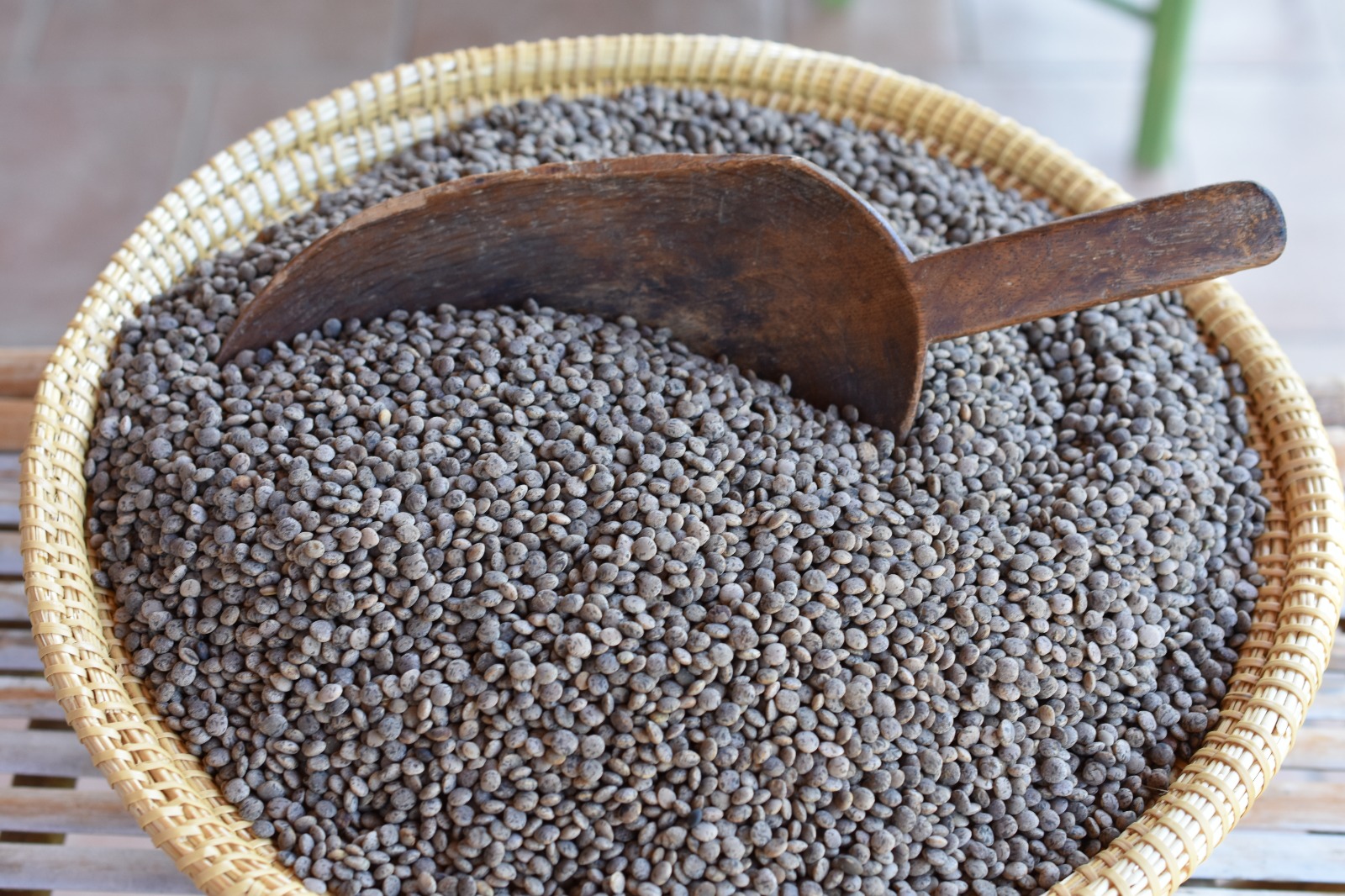
Calasetta black lentil is a historical variety imported from the island of Tabarka (Tunisia) in 1770 by the Ligurian families who founded the community of Calasetta on the island of Sant'Antioco. Known locally as *"Lentiggia naigra de Cadesedda"*, this plant has an emergent prostrate bearing, a glabrous stem with numerous internodes and floral branches with delicate flowerswhite-blues that bloom between March and May. The seeds, of lenticular globular shape, range from brown to light brown with grey-anthracite speckles, making this lentil a distinctive element of Calasetta's agricultural and gastronomic tradition.
For more information visit
www.biodiversitasardegna.it
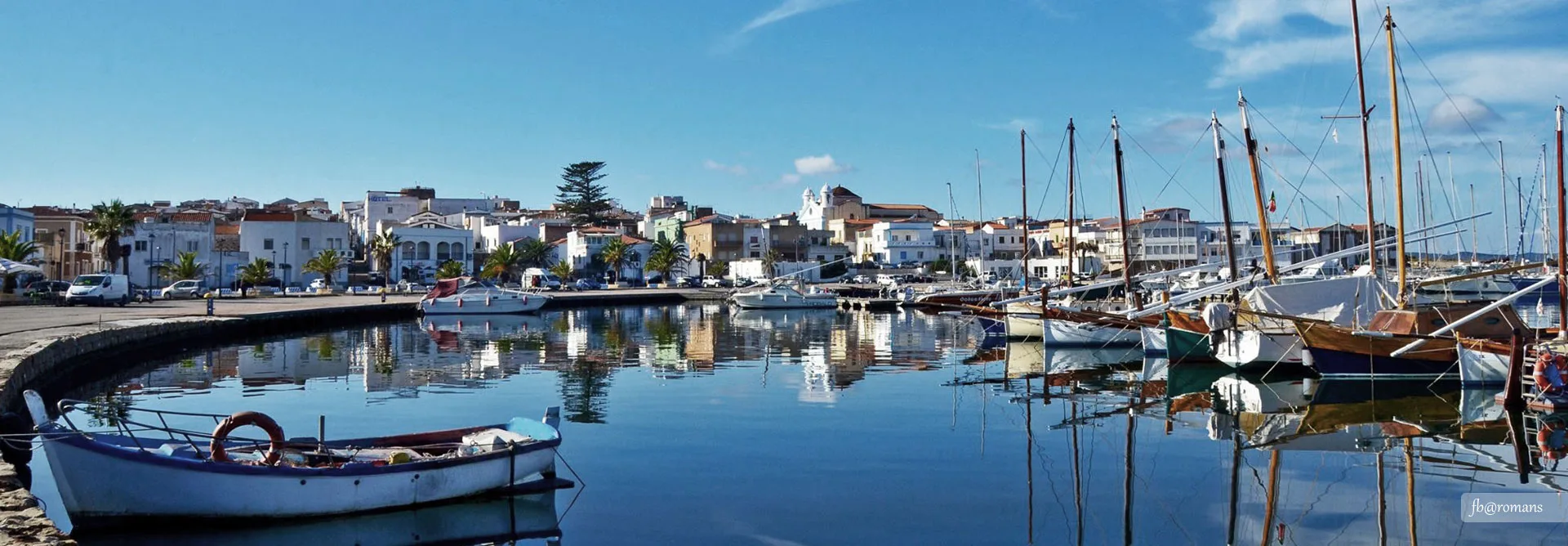
This picturesque town on the southwestern coast of Sardinia, with just over 2,500 inhabitants, maintains an intimate and authentic atmosphere, with brightly colored houses, cobbled streets, and a slow pace of life closely tied to the sea.
The town’s history is deeply connected to the Tabarchino community, which arrived in the 18th century from the Tunisian island of Tabarca. This heritage is still evident today in the local language, traditions, architecture, and culture. The historic center, with its low houses, red-tiled roofs, pastel or light-colored façades, and Ligurian-influenced details, reflects this Mediterranean legacy.
Calasetta’s territory is enriched by stunning beaches such as Sotto Torre and Le Saline, featuring golden sand, crystal-clear waters, and rocky stretches interspersed with small coves. Dunes and seabeds teeming with marine life make the area ideal for hiking, snorkeling, and diving. The harbor serves as the social heart of the town, hosting gatherings, events, and festivals that strengthen the sense of community.
Alongside its natural and cultural heritage, Calasetta also preserves important agricultural traditions. In particular, the protection of local biodiversity plays a significant role. In Calasetta, Michele Ricci and Marianna Aresti serve as custodians of the Calasetta Black Lentil, a traditional and valuable crop. Thanks to their dedication, this heritage variety continues to be preserved and promoted, helping to keep the agricultural memory and local identity alive.
Musei is a small municipality in southwestern Sardinia, located in the Sulcis area, surrounded by gentle hills, vineyards, and rural landscapes that reflect an agricultural and tranquil Sardinia. Far from mass tourism, the village offers an authentic experience shaped by traditions, a slow pace of life, and a strong connection to the land.
The area preserves important historical evidence, including nuraghi, domus de janas, and remains of Punic and Roman settlements, attesting to millennia of human presence. Village life is closely linked to agriculture, shepherding, and rural activities that have long characterized Sulcis. The historic center, compact and orderly, maintains a familiar atmosphere with simple houses, quiet squares, and a community life marked by religious and popular festivals that keep local traditions alive.
Musei’s agricultural landscape is ideal for lovers of slow and sustainable tourism: walks among fields and vineyards, visits to farms and local wineries, allow travelers to discover a discreet yet charming territory. The gastronomy reflects this rural vocation, with authentic dishes based on local products, cheeses, traditional bread, and typical Sulcis wines.
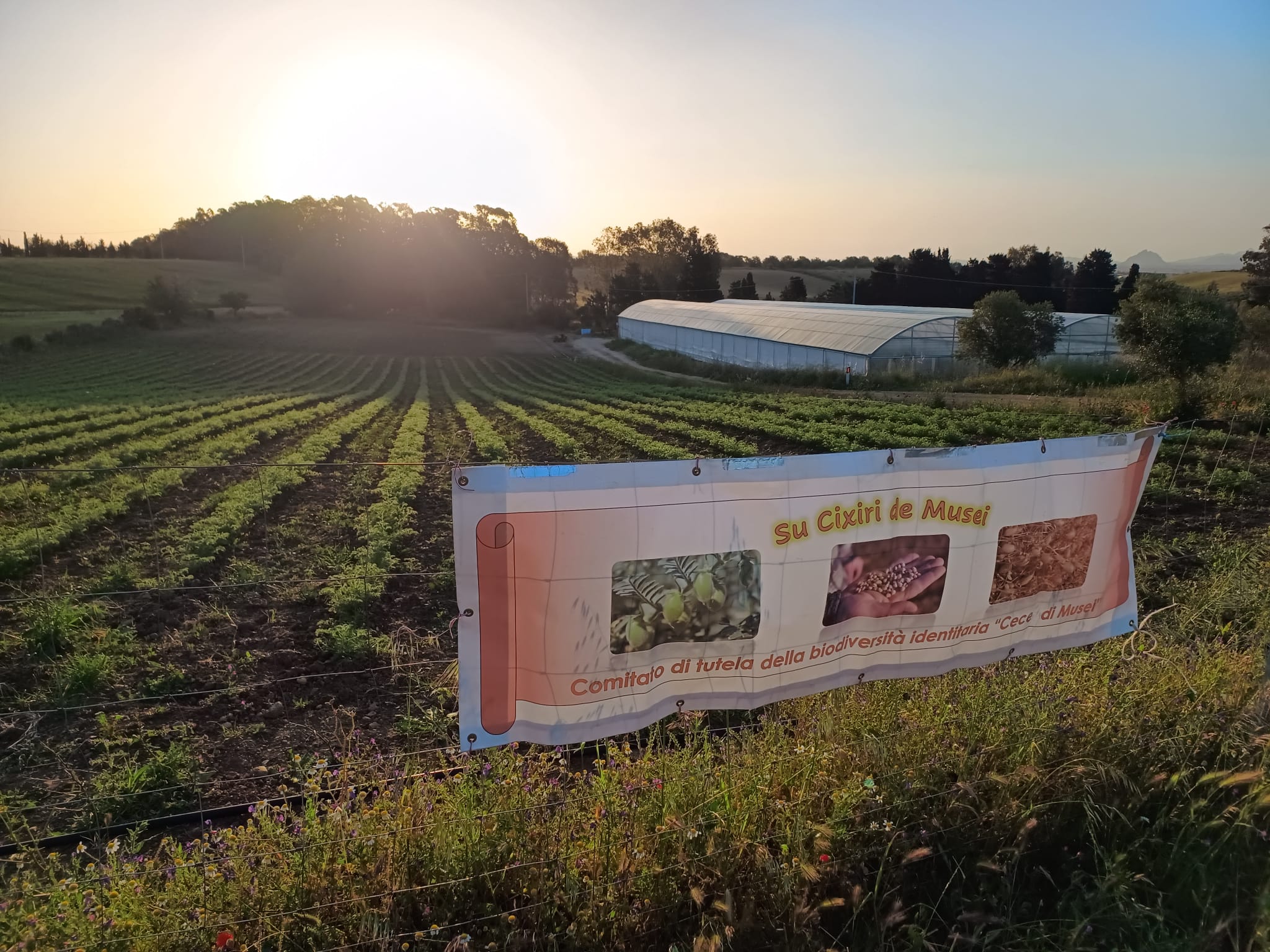
In this context, the preservation of agricultural biodiversity is particularly important. In Musei, several guardians work to safeguard local traditional legumes: Cocco Antonello, Pireddu Fulvio, and Secci Claudia protect the White-Flowered Chickpea of Musei; Portas Giovanni preserves both the White-Flowered and Purple-Flowered Chickpea of Musei; Franzina Simone Pietro and Pisano Doriano care for the White-Flowered Chickpea, the Purple-Flowered Chickpea, and the Black Lentil of Calasetta. Thanks to their dedication, these precious native legumes continue to be preserved and passed on to future generations, keeping Musei’s agricultural and cultural identity alive.